October 2, 2026
How Pipeline Construction Safety Planning Actually Works
What goes into safety planning on a pipeline job, from hazard reviews to daily briefings, before a crew ever breaks ground.
Key takeaways
- Safety planning starts before mobilization, not after the first truck rolls onto the right-of-way.
- A job hazard analysis breaks the day's work into steps and names the hazard tied to each one.
- Daily briefings keep every crew aligned on the plan and the hazards for that stretch of work.
- Every new worker gets a site-specific orientation before they are waved onto an active spread.
- None of it matters unless the crew actually follows it once the paperwork is signed.
A facility owner’s project manager walks a right-of-way for the first time, a week before crews arrive, and asks the contractor a plain question: what actually happens out here before anyone starts digging? It is a fair thing to wonder. Most people outside the industry picture pipeline safety as hard hats and a sign by the gate, not as a process that runs every single day the job is open.
The honest answer is that safety on a pipeline job is less a poster on a trailer wall and more a routine that repeats every morning, on every section of the line, for the life of the project. If you are hiring a contractor for the first time, it helps to know what that routine actually looks like, because it tells you more about a contractor than almost anything else on the bid.
Here is what goes into it, in the order it actually happens on a working spread.
Planning starts before the crew ever shows up
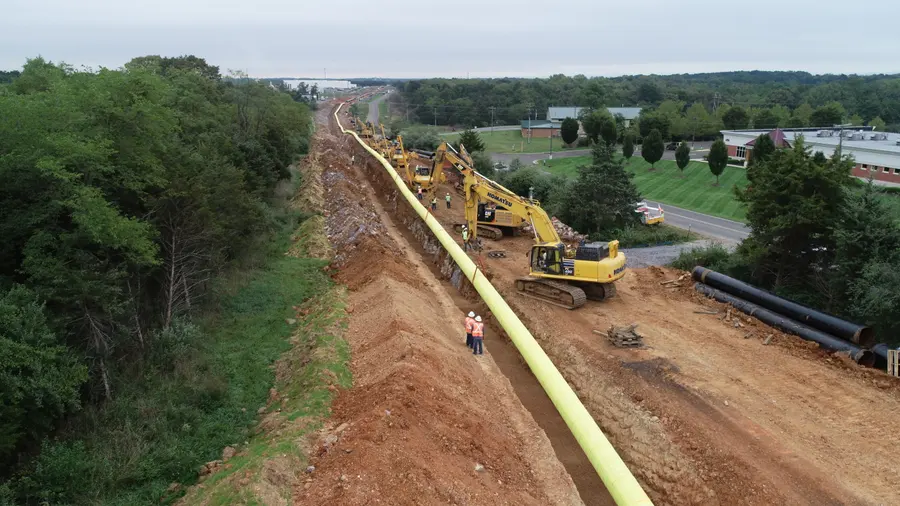
The planning does not begin the morning the first truck rolls onto the right-of-way. It starts well before mobilization, when the superintendent and the safety team walk the route on paper and figure out what the job actually involves.
That means looking at the terrain, the crossings, the known utilities in the ground, and anything on the route that is not a simple straight ditch. Utility locating and damage prevention is part of this early work, because you cannot plan around a hazard you have not found yet. It also means lining up the equipment, the crew counts, and the sequence of work so that nobody arrives on site without a plan already in place for the section they are about to build.
This is the part that is easy to skip and expensive to skip. A contractor that shows up to a job with no plan beyond “clear and start digging” is not managing risk, it is hoping nothing goes wrong. The planning done in the weeks before mobilization is what turns that hope into an actual plan.
The job hazard analysis breaks the day down into steps
Once the crew is on site, the daily tool for managing risk is the job hazard analysis, usually shortened to a JHA. It takes the work planned for that day and breaks it into individual steps, and for each step it names the hazard that comes with it and the control that addresses it.
Welding has its own hazards. Trenching has different ones. Lowering a welded section of pipe into an open ditch is its own operation with its own risks, and so is working near a road crossing with traffic moving nearby. A JHA does not treat “today’s work” as one big task. It pulls the day apart into pieces small enough that a crew can actually see where things could go wrong, which is also why trench safety and shoring gets its own specific attention rather than getting folded into a generic safety talk.
The document itself is not the point. The point is that the crew has actually thought through the day’s hazards before the first shovel moves, instead of discovering them in the middle of the work.
A good JHA also travels with the job as conditions change. If a section of ground turns out wetter than expected, or a crossing gets more complicated once the trench is open, the analysis gets updated rather than filed away and forgotten. Treating it as a living document, instead of a form signed once at the start of the week, is one of the clearer signs that a safety program is actually being worked rather than just maintained on paper.
Daily briefings keep everybody on the same page
Every shift starts with a briefing, sometimes called a toolbox talk, where the crew and the foreman walk through the plan for that day. It covers what is being built, where, with what equipment, and what hazards from the JHA apply to that specific stretch of work.
It also covers what changed since the last briefing. Weather is a common one. So is a new crossing coming up, a change in soil conditions, or equipment moving into a section where it was not the day before. A pipeline right-of-way is not static. The crew working it today is not working the exact same conditions as the crew working it yesterday, even on the same job, and the daily briefing is how that gets communicated instead of assumed.
These briefings take a few minutes. They are also the single easiest place for a safety program to either work or quietly fail, because a briefing that gets rushed or skipped is a crew that starts the day without a shared plan.
On a multi-crew spread, the briefing is also where the pieces get coordinated. The clearing crew, the welders, and the crew lowering pipe into the trench are all working the same stretch of ground on different timelines, and a short conversation each morning is what keeps one crew from getting ahead of the ditch or another from falling behind the pipe. That kind of coordination is a management skill as much as a safety one, and the two turn out to be the same thing more often than people expect.
Every worker gets oriented to the specific job
Before anyone is waved onto an active spread, they go through a site-specific orientation. That is true whether the person is a new hire or someone who has worked with the same contractor for years, because the orientation is not about the person. It is about the job.
Every project has its own route, its own crossings, its own access points, and its own rules for things like PPE, vehicle traffic on the right-of-way, and who is authorized where. A crew member who worked a flawless job last month on different terrain still needs to know the specifics of this one before stepping onto it. Orientation is where that happens, and it is also where a contractor’s safety culture either shows up in practice or does not.
Training and certification are what back the plan up
None of this planning works without people who are actually qualified to do the tasks they are assigned. This is where a contractor’s training and certification standing matters, and it is worth asking about directly.
Being signatory to the trades that build a pipeline means the people on the crew came through hiring halls that train and test them before they ever reach the right-of-way. It is also why energy clients check a contractor’s standing in programs like ISNetworld, Veriforce, and OQSG before a job ever starts, and why contractors show up at the industry safety summits their clients run. Those systems and events are not separate from day-to-day field planning. They are the reason the people writing and following the JHAs and briefings know what they are looking at.
- A JHA or briefing is only as good as the training behind the person reading it.
- Certifications and union standing are the proof that the training actually happened.
The plan only matters if the crew follows it
Here is the part that is easy to lose sight of. A thorough JHA, a well-run briefing, and a clean orientation file do not protect anyone on their own. They only matter if the crew treats them as the actual plan for the day and not as paperwork to get past before the real work starts.
That is why the best gauge of a contractor’s safety program is not the binder, it is what the work looks like on the ground. Are people wearing what the plan says to wear. Is the crew working the sequence the briefing described. Does a foreman stop work when something does not match the plan, or push through because stopping costs time. Those answers are harder to see on a bid sheet than a certification number is, but they are the ones that actually decide whether a job stays safe.
If you ever get the chance to walk an active job, watch for the quiet signs rather than the obvious ones. A crew that stops on its own to re-check a step, a foreman who asks a question before letting work proceed, a site where the briefing from that morning is clearly still the plan everyone is working from hours later. None of that shows up in a proposal, but it is exactly what the planning described above is supposed to produce.
A safe job and a job that finishes on schedule are usually the same job. Planning ahead of time, briefing every day, and orienting every worker is not overhead on top of the construction. It is how the construction gets done without the kind of incident that stops everything.
If you are putting together a project and want to know how a contractor actually runs this day to day, ask them to walk you through it in specifics, not generalities. Request a bid and tell us about the job, and we will walk you through exactly how we would plan and run it on your route.
Frequently asked questions
What is a job hazard analysis on a pipeline project?
A job hazard analysis, or JHA, breaks a task down into its individual steps and identifies the hazard tied to each one, along with the control that addresses it. On a pipeline job, that might mean looking at a day of welding, trenching, or lowering-in, and walking through what could go wrong at each step before anyone starts.
How often does a pipeline crew get a safety briefing?
Typically at the start of every shift, before the crew moves to its assigned section of the right-of-way. The briefing covers the plan for that day, any hazards specific to that stretch of work, and anything that changed since the last shift, such as weather or a new crossing.
Who is responsible for safety on a pipeline job site?
Everyone on the crew carries part of it, but the superintendent and foremen own the plan day to day, and the safety program behind it is set at the company level. A contractor's safety record usually traces back to how consistently that chain actually functions in the field.
Does a new crew get the same orientation as one that has worked with a contractor for years?
Yes. Every worker, new hire or returning crew, gets oriented to the specific job before stepping onto an active spread. The route, the crossings, the hazards, and the site rules are specific to that project, so the orientation has to be too.
Does safety planning slow a pipeline project down?
Not when it is built into the schedule from the start. A JHA and a daily briefing take minutes, not hours, and they catch the kind of mistake that costs days of rework or an incident that shuts the job down entirely. Planned-for safety protects the schedule more than it costs it.