
May 19, 2026
Pipeline Rehabilitation vs. Replacement
How operators decide when an aging pipeline can be rehabilitated and when it truly needs to be replaced, and what actually drives that call.
Key takeaways
- Rehabilitation keeps a fundamentally sound line in service by fixing what is wrong, while replacement puts new pipe in the ground.
- The decision runs on inspection and integrity data, not a gut feel, and it starts with the condition of the existing line.
- Future demand matters as much as current condition, since a line that needs more capacity often has to be replaced regardless.
- A full replacement is the bigger job, so ask whether the contractor benefits from the recommendation they are giving you.
- A self-performing contractor can handle rehab and replacement scopes, which keeps the advice honest and the schedule tighter.
Picture an operator sitting on a line that has been in the ground for decades. The inline inspection just came back, the flags are stacking up, and now there is a real question on the table. Does this line get repaired and put back to work, or does it come out and get replaced. That single decision can swing a budget by a wide margin, and getting it wrong in either direction is expensive.
It is one of the most common questions in the industry right now, because so much of the network was built a long time ago and is aging in place. Rehabilitation and replacement are both legitimate answers, and the right one depends on the pipe, the data, and what the system has to do next. If you want the wider context on aging infrastructure, our post on integrity management and aging infrastructure is a good companion to this one, and our hiring guide covers how to vet the contractor who will actually do the work.
What rehabilitation actually means
Rehabilitation is the work of keeping an existing pipeline in safe service by fixing what is wrong with it, rather than starting over. Depending on the line, that can mean recoating to stop external corrosion, repairing or reinforcing specific sections, cutting out and replacing short segments, or upgrading valves, fittings, and other components. The line stays largely in place, and the work targets the parts that need attention.
The logic behind rehab is straightforward. If the pipe itself is fundamentally sound and the problems are localized, there is often no reason to spend the time and money to build an entirely new line. Rehabilitation is usually faster, less disruptive to the surrounding area, and less expensive than replacement. For an operator trying to keep a system running and a right of way undisturbed, those are real advantages, not small ones.
Rehab is also less of a permitting and land ordeal in many cases. You are working an existing corridor with existing agreements, which can shorten the front end of a project considerably. That head start on schedule is often the reason rehab wins even when the raw pipe cost of the two options looks similar on paper.
What replacement actually means
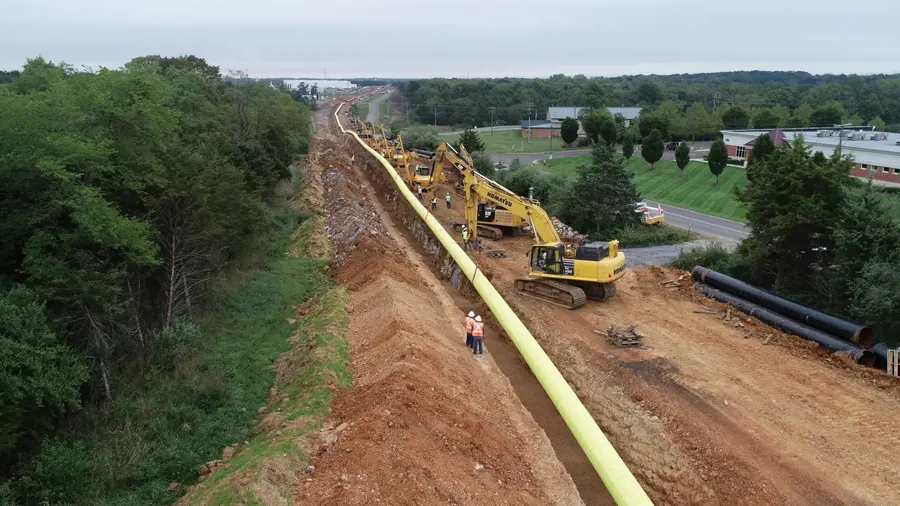
Replacement is what it sounds like. New pipe goes in the ground. That is the right call when the existing line is degraded past the point where patching it makes sense, or when the system needs to do something the old pipe simply cannot. A line that has widespread wall loss, a history of repeated repairs, or damage across long stretches is a candidate for replacement, because at some point you are no longer fixing a good line, you are propping up a bad one.
Capacity is the other big driver. If the demand on a system has grown and the operator needs to move more product, a rehabilitated line still has the same diameter and the same limits it always had. Rehab can restore a pipe to safe service, but it cannot make it carry meaningfully more volume. When the future need is larger than the current line, replacement is frequently the only path that gets there.
Replacement costs more and takes longer, and nobody pretends otherwise. The point is that on the wrong line, rehabilitation is just delaying the inevitable and paying for the delay. Spending money twice on a line that was always going to need replacing is a worse outcome than doing it once.
How the decision actually gets made
The choice is not a coin flip or a sales pitch. It runs on data. The condition of the existing pipe, the results of inline inspection and other integrity assessments, the age and coating history of the line, the operating pressure, and the future demand on the system all feed the call. Engineering judgment ties those inputs together into a recommendation, and the operator makes the final decision.
That is why the assessment work matters so much. Before anyone can say rehab or replace with confidence, they need to know what is actually happening inside the pipe and along its length. Good inspection data can save an operator from replacing a line that had plenty of life left, and it can also catch a line that looked fine but was quietly failing. The decision is only as good as the information underneath it, which is exactly why this ties so closely to a real integrity program rather than a guess.
There is also a middle ground that people forget about. It is rarely all or nothing. A project might rehabilitate most of a line and replace a few bad segments, or replace the section carrying the heaviest load while leaving the rest in service. A contractor who self-performs a wide range of work can flex to whatever the data calls for instead of forcing the job into whatever they happen to be set up to do.
Cost is a lifecycle question, not a single number
It is tempting to reduce this to one comparison, the price of a rehab against the price of a replacement, and pick the smaller figure. That framing misses most of the picture. The real question is what each option costs over the life of the asset, including the repairs you can expect down the road, the risk each option carries, and the value of the service the line provides while it stays in operation.
A rehab that puts a marginal line back in service for a few years, only to fail again and force an emergency replacement later, was not actually the cheaper option. Neither is a replacement on a line that had another twenty good years in it. The strongest recommendations account for the second and third order effects, not just the invoice in front of you. That is where experienced judgment earns its keep, because the pipe does not come with a warranty label telling you how it will behave.
Downtime is part of that math too. A line that has to come out of service for a long replacement carries a cost that never shows up on the construction estimate, and for a high-value system that lost throughput can dwarf the difference between the two scopes. Weighing all of it together is the point, and it is why the cheapest bid is not automatically the right plan.
The part worth being honest about
Here is the thing to watch for. A full replacement is a bigger job than a rehab, which means there is a built-in temptation for a contractor to steer you toward the larger scope. That does not make every replacement recommendation wrong, plenty of lines genuinely need it, but it does mean you should understand who benefits from the advice you are getting.
A straight contractor will tell you when rehabilitation makes more sense, even though it is the smaller and less profitable job. That kind of honesty is how this business is supposed to work, and it is a fair thing to test for when you are choosing who to trust with a line. Our list of questions to ask a pipeline contractor is built partly around exactly this kind of situation.
It helps to ask directly. What in the integrity data is driving this recommendation. What would have to be true for the other option to win. If a contractor can walk you through the reasoning in plain terms, and can point to the specific findings behind it, that is a good sign. If the answer is vague or leans on urgency without evidence, slow down.
Why the contractor you pick changes the answer
Two contractors can look at the same line and hand you different plans, and it is not always because one is dishonest. A shop that only does new construction will tend to see replacement, because that is the tool in their hand. A shop that self-performs rehab work, segment replacement, coating, testing, and the civil work around it can genuinely weigh both, because either outcome is work they can do well.
That range matters on schedule too. When one contractor can handle the inspection support, the rehab, and any replacement segments without stitching together a chain of subcontractors, the project moves faster and the accountability stays in one place. You can see the full scope we self-perform on our services page, and it is worth confirming that whoever you hire can actually deliver both answers, not just the one they prefer to sell.
None of this replaces the operator’s own engineering, and it should not. But the contractor is part of the decision, not just the hands that execute it, and a good one earns that seat by being useful and honest about the trade-offs rather than by talking up the biggest possible job.
If you are weighing rehab against replacement on a line, get in touch and tell us what you are seeing, even if all you have so far is inspection data and a question. We would rather help you land on the right answer than sell you the bigger one, and you can start that conversation here.
Frequently asked questions
Is rehabilitation always cheaper than replacement?
Usually, yes, because you are repairing an existing asset instead of building a new one. The exception is a line that keeps needing repairs. On badly degraded pipe, repeated rehab work can cost more over time than replacing it once.
How do you know if a pipeline can be rehabilitated?
It comes down to inspection and integrity data. If the pipe is fundamentally sound and the problems are localized, rehabilitation is usually on the table. If the wall loss or damage is widespread, replacement becomes the safer answer.
Does replacement always mean digging up the whole line?
Not necessarily. Many projects replace specific segments rather than the entire run. The right scope depends on where the problems are and what the system needs to do going forward.
Can rehabilitation add capacity to a pipeline?
Only within limits. Rehab can restore a line to safe service and extend its life, but it cannot make the pipe carry meaningfully more volume. When the system needs to move more product, that generally points toward replacement.
Who decides between rehab and replacement?
The operator owns the decision, guided by integrity data, engineering judgment, and the contractor building the work. A straight contractor will tell you when the smaller job is the right one.