
July 3, 2026
Pipeline Construction for Data Centers and Power Plants
Building a data center or gas-fired plant and suddenly need a gas line? How the pipeline gets built, and why an early contractor protects your schedule.
Key takeaways
- Rising data center power demand is increasingly met with natural gas, so more sites need a dedicated gas line built to them.
- Getting gas to a facility usually means tying into a transmission system, building new pipe, adding a meter station, permitting, and testing.
- Design-build or EPC delivery puts engineering, permits, procurement, and construction under one contractor so nothing falls through the cracks.
- Pipeline work often sits on the critical path next to long-lead equipment like turbines and transformers.
- Bringing a pipeline contractor in during early site planning is the best move for protecting your timeline and budget.
If you are developing a data center or a gas-fired power plant, there is a good chance pipeline work landed on your plate without much warning. You know how to build facilities. Running land pipe is not your expertise, and it is not something your team does every day. The good news is that this is a well-worn path, and you do not have to figure it out on your own.
The developers who move fastest tend to have one thing in common. They treat the gas connection as its own project with its own schedule, and they bring in a partner who does this work every day. Below is a plain look at what gas service actually involves, why it so often ends up on the critical path, and how EPC and design-build delivery keeps the pipeline from becoming the reason your facility opens late.
Why this keeps landing on developers
Power demand from data centers has climbed sharply, and a large share of that new demand is being met with natural gas. More sites now need a gas line run to them, often on a schedule that leaves little room to spare. Utilities and gas operators already know which pipeline contractor to call because they build this way constantly. Data center and power developers usually do not, because until now they never had a reason to.
So the search begins, which is very likely how you got here. It is a fair question to ask, and it is worth understanding the shape of the work before you start comparing contractors. The good news is that the pipeline side is predictable when it is planned well. It goes sideways mostly when it is treated as an afterthought and squeezed into whatever time is left near the end.
What gas service actually requires
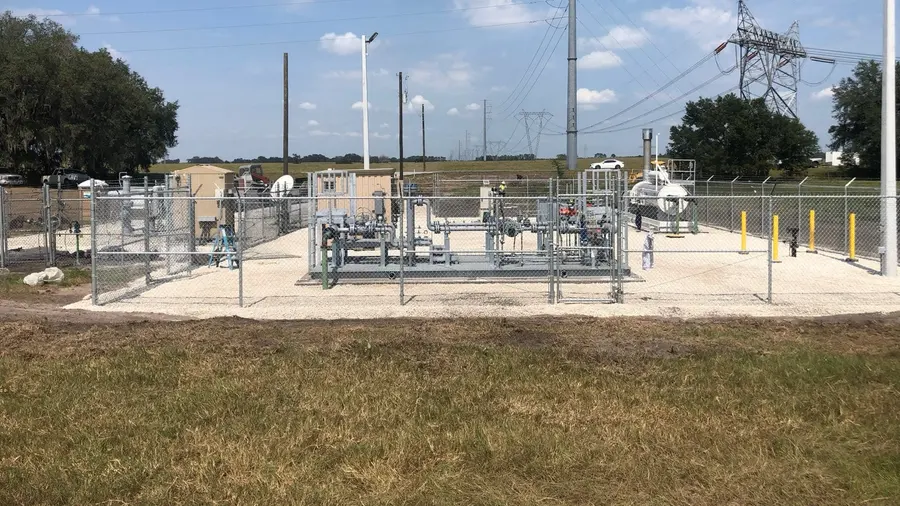
Getting gas to a new facility is a good deal more than dropping pipe in a ditch. Depending on the site, the scope can include tying into an existing transmission system, building new transmission or distribution pipe across the right of way, and constructing a meter station where the gas is measured and regulated before it reaches your equipment. Around all of that sits permitting, land and easement work, hydrostatic testing to prove the line before it goes into service, and the field coordination that keeps each piece moving in the right order. Some sites also call for specialized crossings under roads, rail, or water, which add their own engineering and scheduling wrinkles. The mix looks different on every project, and part of the early work is simply mapping which of these items actually apply to yours.
Any one of those items can quietly become the long pole in the tent if it is handled late. Permitting in particular runs on its own clock, and no amount of construction speed will make up for a permit that was applied for too late. A contractor who has walked this path before can tell you which items tend to control the schedule on a project like yours, and which ones have some slack, so you are planning around reality rather than guesswork.
Why design-build fits these projects
For most developers, the cleanest path is design-build, sometimes called EPC delivery. Under that model, one contractor owns the engineering, the permits, the procurement, and the construction of the pipeline scope. You tell us where the gas needs to go and roughly how much you need, and we handle the pipeline side from the first sketch to the final tie-in.
The value there is not just convenience. When engineering and construction live under one roof, the design gets built by the same team that has to install it, so it reflects what actually works in the field. Handoffs shrink, and so do the gaps where a decision gets made in one silo and creates a problem in another. You also get a single point of accountability for the gas connection, which matters a great deal when your leadership asks who owns the date. If you want a closer look at how this compares to the traditional bid model, our post on design-build versus bid-build for pipelines breaks down the trade-offs.
The schedule reality
Here is the part worth internalizing. On power and data center projects, the pipeline is frequently sitting on the critical path right alongside long-lead equipment such as turbines and transformers, and some of that equipment carries multi-year wait times. Nobody wants the gas line to be the item that slips. Yet it slips more often than it should, and almost always for the same reason. It got started too late.
Think about how a project like this usually unfolds. The facility design commands everyone’s attention first, because that is the visible part everyone understands. The gas connection gets a placeholder on the schedule and a note that says handle later. Later arrives, the routing turns out to be trickier than the placeholder assumed, a permit needs months rather than weeks, and suddenly the pipeline is the thing standing between a finished building and an operating one. It is a preventable situation, but only if the pipeline scope is treated as real work with a real timeline from the beginning.
Bring the pipeline contractor in early
The single most useful thing you can do is bring a pipeline contractor into the conversation while the site is still being planned. Early involvement is where the real savings live, both in time and in money. When we are at the table during routing and layout, we can flag permitting timelines, identify crossing and easement issues, and tell you what is realistic on schedule before your dates are locked in.
Picture a developer who has a site selected and a rough gas load in mind but has not yet frozen the facility layout. That is the ideal moment to talk. A small adjustment to where the line enters the property or where the meter station sits can save weeks later, and those adjustments are nearly free while the plans are still flexible. Once the design is set in concrete, the same fix becomes an expensive change order. Early conversations also give you honest numbers to plan against, so you are not carrying a hopeful placeholder that reality is about to blow up.
What to look for in a contractor
Not every pipeline contractor is built for this kind of work, so it helps to know what separates a strong partner from a risky one. The first thing to weigh is how much of the scope the contractor self-performs. A crew that runs mainline pipe, drills the tricky crossings, builds the meter station, and tests the line with its own people keeps control of quality and schedule instead of stitching together a chain of subcontractors. That matters most when the calendar is tight and every handoff is a chance for something to slip.
Safety standing is the next thing to check, and it is not a formality. Look for current qualifications in the programs owners and operators actually screen against, along with a workforce that is trained and credentialed for the craft. Ask how the contractor is organized, whether ownership is reachable when a decision needs to be made, and how capacity is measured in spreads and crews rather than vague promises. If you want a fuller checklist for these conversations, our questions to ask a pipeline contractor is a practical place to start. The goal is simple. You want a partner who has done this before and will tell you the truth about your schedule, even when the truth is not what you hoped to hear.
Where to start
If a pipeline scope has landed on a project and you are not certain where to begin, that is exactly the conversation we are set up for. We work with data center and power generation developers who need a gas line built and want a straight answer about what it will take. We will walk you through what is realistic, in plain terms, before you commit to anything.
Get in touch and tell us what you have, even if all you have is a line drawn on a map. Reach out through our contact page and share where the gas needs to go, and we will help you figure out the rest.
Frequently asked questions
We build facilities, not pipelines. Do we need to understand all of this?
Not in detail. That is what the contractor is for. Your job is to bring the right partner in early and share where the gas needs to go, the schedule you are working toward, and any site constraints. A good design-build contractor translates the pipeline scope into plain terms so you can make decisions.
How early should we talk to a pipeline contractor?
As early as you have a site and a rough idea of your gas load, ideally while routing and layout are still flexible. Early involvement lets the contractor flag permitting timelines and routing issues before your dates are locked in. Waiting until the facility design is frozen is where avoidable delays usually start.
What is a meter station and why does our project need one?
A meter station measures and regulates the gas coming into your facility, and it often includes filtration and pressure control. Most new data center and power plant connections require one so the delivered gas matches what your equipment needs. It is a civil and mechanical build in its own right, so it belongs in the schedule from the start.
Can one contractor handle both the engineering and the construction?
Yes. That is the core idea behind design-build and EPC delivery. One contractor owns the engineering, permitting, procurement, and construction of the pipeline scope, which reduces handoffs and gives you a single point of accountability for the gas connection.