October 9, 2026
Block Valves, Pig Launchers, and Receivers on a Pipeline
What block valves and launcher/receiver stations do on a pipeline, why they show up on the route before construction starts, and what gets built at each one.
Key takeaways
- A block valve is a shutoff point built into the line itself, spaced along the route to isolate a segment in an emergency or for maintenance.
- A launcher and receiver are the facilities that send and retrieve a pig, the tool that cleans or inspects the inside of the pipe without digging it up.
- Spacing and placement for these facilities is driven by code and route conditions, not preference, which is why they land on the alignment sheet early.
- Each site is its own small civil and fabrication scope: a pad, piping, valves, and venting, built to the same weld and pressure standards as the mainline.
- Planning valve and launcher sites early protects both the schedule and the easement, since each one needs its own parcel of land and access.
An engineer reviewing alignment sheets for a new gas line notices a callout every so often along the route: a small square symbol with a note beside it, block valve, and a little further down, launcher/receiver. Nothing about it looks like pipe in a trench. It looks like a small facility, with its own footprint, its own fence line, and its own line item in the land agreements. The question that follows is a fair one: what is actually being built at these spots, and why does a straight run of pipe need stops along the way?
It is a good question to ask before a route is finalized, not after. Valve and launcher sites get decided during pipeline construction planning, long before anyone strings pipe, and they shape both the schedule and the land that has to be secured. They are also one of the pieces people miss when they picture how a pipeline project comes together, because the mental image is almost always a ditch and a welding crew, not a small concrete pad with piping and valves sitting off to the side of the right-of-way.
This post covers what a block valve actually does, what pigging is and why it needs its own facilities, what gets built at one of these sites, and why all of it belongs on the plan early rather than as an afterthought.
What a block valve actually does
A pipeline is one continuous run of pipe, which is exactly what you want when product is flowing and exactly what you do not want if something goes wrong. A block valve solves that problem. It is a valve built directly into the line, closed under normal conditions it stays open, but it gives an operator the ability to shut off, or isolate, a section of pipe without taking down the entire system.
Think of it as a series of doors along a hallway. Close one and you have sealed off a short stretch instead of the whole building. On a pipeline, that matters for emergency response, since isolating a shorter segment limits what has to be purged or repaired. It matters just as much for routine maintenance, because a section can be taken out of service for inspection or repair while the rest of the line keeps operating.
Some block valves are operated by hand in the field. Others are tied into remote control and monitoring systems so an operator can close them from a control room the moment something looks wrong, without waiting for a crew to drive to the site. Which approach fits a given valve depends on the line, the surrounding area, and what the operator’s own procedures call for. Either way, the valve has to actually work when it is needed, which is a different bar than most equipment on a job site has to clear. These valves also get used during construction itself, not just once a line is in service. When a new segment ties into an existing system, isolating that tie-in point is often what makes the connection possible to build safely in the first place.
What pigging is, and why it needs a launcher and a receiver
Once a pipeline is buried, you cannot walk inside it with a flashlight. Operators still need to clean the inside of the pipe and check its condition over time, and that is where pigging comes in. A pig is a tool, sometimes a simple scraper, sometimes an instrumented tool packed with sensors, that travels through the inside of the line, pushed along by the product itself.
A launcher is the facility where the pig goes in. It is a sealed chamber, roughly in line with the pipe, where the pig is loaded and then released into the flow. A receiver is the matching facility at the other end, where the pig is captured and removed once it has made its run. Some lines have a launcher at one end and a receiver at the other. Longer or more complex systems can have several of each, spaced to match how the line is operated and inspected.
This is also where pigging connects to integrity management. An instrumented pig run through a line can flag wall loss, dents, or other conditions worth watching, all without digging up a single foot of pipe. None of that is possible unless a launcher and receiver exist to get the tool in and out in the first place.
Not every pig run is about inspection. Simple cleaning pigs push through to clear debris, water, or construction residue out of a new line, which is routine on a freshly built pipeline before it ever carries product. Whatever the pig is doing inside the line, the launcher and receiver are built to handle real pressure safely while someone opens them up to load or unload the tool, which is why these are pressure vessels in their own right and not just a pipe fitting with a door on it.
What actually gets built at one of these sites
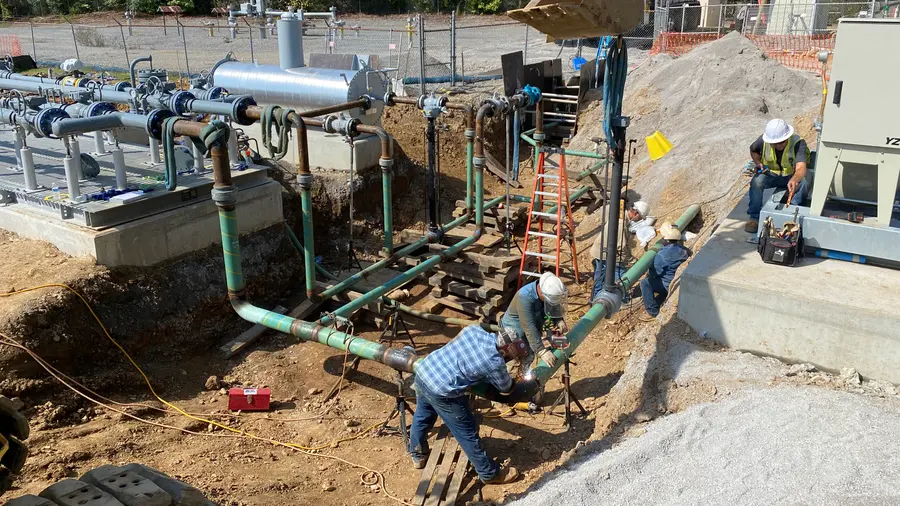
A block valve site and a launcher or receiver site are not just a valve sitting in a field. Each one is a small, self-contained construction scope, closer in kind to a mini version of a meter station than to a stretch of mainline.
The work at each site typically includes:
- Site grading and a concrete pad or foundation, sized and tied in to hold the valve and piping assembly
- The piping, valves, and fittings themselves, fabricated and welded to connect into the mainline
- Venting and pressure relief equipment, so the facility can be operated and purged safely
- Fencing and access, since these are controlled facilities that need a way in for trucks and maintenance crews for as long as the line operates
The fabrication at these sites runs through the same shop and field capability as the rest of the job. Our fabrication scope covers the spools and assemblies that make these tie-ins possible, and every weld still gets inspected the same way it would anywhere else on the line. A valve station is not a lower standard of work just because it sits off the main trench line, and the weld inspection that governs the mainline governs these connections too.
Why these sites show up on the plan before construction starts
Block valve and launcher or receiver locations are not picked at random, and they are rarely picked for convenience alone. Placement is driven by the regulations that apply to the specific line, by the terrain and what is near the route, and by how the operator plans to run and inspect the system once it is in service. That is why these locations get worked out during design and routing, well before crews mobilize.
That timing matters for a practical reason. Each site needs its own parcel of land, typically wider than the standard right-of-way, plus permanent access for the life of the facility. If that need gets identified late, it becomes a land agreement problem on top of a construction problem, which is exactly the kind of gap covered in how right-of-way easements get negotiated. A route that looks finished on paper but has not accounted for these footprints is not actually finished.
Schedule is the other reason to plan these sites early. Valves, actuators, and launcher or receiver vessels are ordered items with their own lead times, not stock parts sitting on a shelf. If the facility design is not settled until late in the job, the equipment for it gets ordered late too, and the civil and fabrication crews end up waiting on hardware instead of working. Folding these sites into the schedule at the same point the route itself is being finalized is what keeps them from becoming the thing that holds everything else up.
What this means if you are planning a system
If you are an operator, a developer, or an EPC team working through a pipeline scope, valve and launcher or receiver sites are worth a direct conversation early, not a detail to sort out once pipe is already strung. Ask where they will sit, how much land each one needs, and how the civil and fabrication work at those sites fits into the overall schedule. A contractor who has actually built these facilities will walk through the specifics without hesitation. One who has only built straight pipe may not have thought about it yet.
This is the kind of scope we expect to answer for directly, the same way we do for gas and energy operators who already know what to ask. If you have a route with valve or launcher sites on it, or you are not yet sure where they need to go, get in touch and request a bid. We will walk through what the sites need, land and all, before anything gets locked in.
Frequently asked questions
What is a block valve on a pipeline?
A block valve is a valve built into the pipeline itself that can close off, or isolate, a section of the line. It lets an operator shut down one segment for an emergency or for maintenance without having to shut down the entire system.
What is pigging, and what do launchers and receivers do?
Pigging is sending a tool, called a pig, through the inside of a pipeline to clean it or inspect it without excavating the line. A launcher is the facility where the pig is inserted and pushed into the line with product flow. A receiver is where it comes back out at the other end.
How far apart are block valves placed on a pipeline?
Spacing depends on the regulations that apply to the line, along with terrain, population near the route, and what the operator needs for isolation. There is no single distance that fits every project, which is why valve placement gets worked out during design, not left until construction.
Do valve and launcher sites need their own easement or land?
Usually, yes. Most of these facilities need a parcel at least as wide as the right-of-way, and often more, plus permanent access for trucks and maintenance crews for the life of the line. That need should get identified during land agreements, not discovered afterward.
Does Appalachian Pipeline build valve stations and launcher and receiver facilities?
Yes. This is part of our self-performed specialized scope, the same crews and fabrication capability we use for meter stations and tie-ins, built to the same standards as the mainline.