November 24, 2026
What Happens During Lowering-In and Backfill?
Lowering-in sets a welded pipe string into the trench, and backfill buries it. Here is how each step works and what protects the coating along the way.
Key takeaways
- Lowering-in is the step where sidebooms lift a long welded string of pipe and set it into the trench as one piece.
- The trench has to be checked first: right depth, clean bottom, no rock or debris that could press into the coating.
- A final coating check right before the pipe goes down catches damage while it can still be repaired in the open.
- Backfill goes back in layers, with protective padding next to the pipe and topsoil saved for the very top.
- Lowering-in and backfill are where a pipe's long-term protection gets locked in, because nobody sees the pipe again after this.
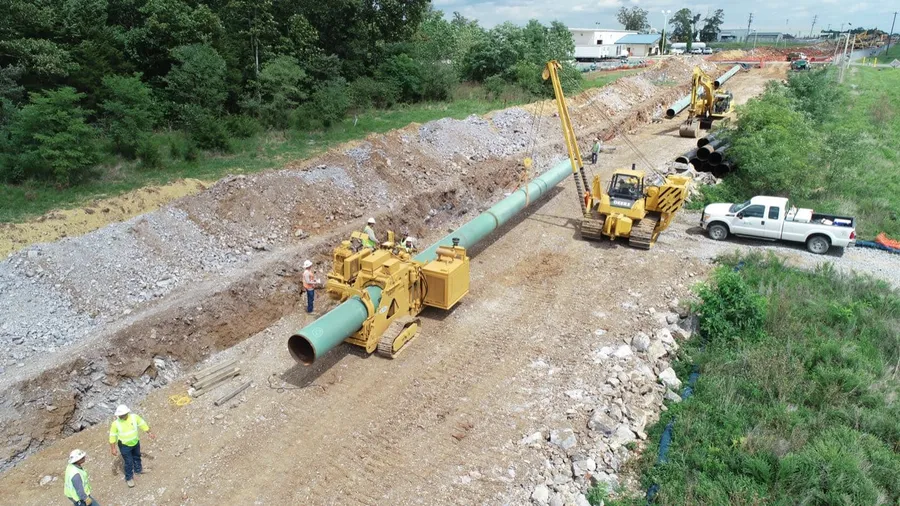
A plant manager drives out to see the gas line going in for a new expansion. For weeks the right-of-way has looked like a long row of pipe sitting on wooden skids beside an open ditch. On this visit, a row of yellow machines is lifting the whole string at once and easing it into the trench. It looks simple from the truck. It is also one of the steps where a pipeline’s long-term health gets decided.
Lowering-in and backfill come late in the pipeline construction sequence, after the pipe has been strung, bent, welded, inspected, and coated. We gave the short version in our post on how a pipeline project comes together. This post slows that stage down: what happens to the trench before the pipe goes in, how the string actually gets lowered, and why the way the ditch is filled back in matters as much as anything that happened above ground.
What lowering-in means
Lowering-in is the step where a welded and coated string of pipe is moved from the skids beside the trench into the trench itself. On a small distribution line, one machine can handle it. On larger pipe, the string is long and heavy enough that it takes a line of sidebooms, the tracked machines with a boom on the side built for carrying pipe, working together.
The goal is to move the string as one continuous piece. Each sideboom holds a section, and the operators raise, swing, and lower in coordination so the pipe stays in a smooth curve the whole way down. If one machine lifts too far ahead of the others, the pipe can bend in a way it was never designed for, or swing into the trench wall and scrape the coating. That is why lowering-in looks slow and deliberate. It is supposed to.
The trench gets checked before the pipe moves
Before any pipe leaves the skids, the trench itself gets a close look. It has to be deep enough to give the pipe the cover the design calls for, wide enough for the pipe to sit without rubbing the walls, and clean along the bottom. Loose rock, roots, chunks of concrete, and anything else that could press into the coating come out before the pipe goes in.
The trench bottom also has to follow the line. Pipe that has been field bent to follow the terrain needs a ditch shaped to match, so the pipe rests evenly instead of bridging across a high spot with empty space beneath it. A pipe that hangs over a hump in the trench carries stress at that point for as long as it is in the ground.
In rocky country, this step gets more involved. A trench cut through rock rarely leaves a clean bottom on its own, so crews lay a bed of fine padding material first, giving the pipe something soft and uniform to rest on. Where the trench holds water, the crew may need to pump it out, and on some lines weights or anchors are needed to keep the pipe from floating once it is down.
The last coating check before the pipe disappears
Coated pipe gets handled a lot. It is loaded, trucked, unloaded, strung, lifted for welding, and lifted again for coating the joints. Every one of those moves is a chance to nick the coating. So right before lowering-in, the coating usually gets one more electronic inspection, often called holiday detection. A probe passes over the pipe, and any bare or thin spot in the coating sets it off.
This check matters because of what the coating does. It is the first barrier between the steel and the soil, and the corrosion control and cathodic protection system is designed around the assumption that the coating is intact. A flaw found above ground is a quick repair. The same flaw found years later means digging up a buried line to reach it.
How the string goes into the ditch
Once the trench and the coating are both cleared, the sidebooms pick up the string. Lifting is done with slings or cradles designed to carry coated pipe without damaging it, never with bare chains or hooks against the coating. The operators move in sequence, raising the string off the skids, swinging it out over the trench, and lowering it until it settles on the bottom.
Crew members on the ground watch the pipe the whole way down, guiding it away from the trench walls and confirming it is seated where it should be. Once the pipe is resting on the bottom, the slings are released carefully so nothing drags along the coating as it comes free.
Lowering-in is rarely one continuous pass from one end of the job to the other. Road crossings, bores, valve sites, and tight spots break the line into sections. Each section is lowered in, and the gaps between them are closed later with tie-in welds made in the trench. Those tie-ins get the same weld inspection and coating as any other joint on the line.
Why the trench does not stay open long
Good crews try to keep the gap short between digging the trench, lowering in the pipe, and filling it back in. An open trench is exposed to everything. Rain can fill it with water and soften the walls, and the longer it sits, the more likely the sides are to slough off or cave in. That loose material ends up on the trench bottom, right where the pipe is supposed to rest, and it has to be cleaned out again before lowering-in can go ahead.
An open trench is also a hazard in its own right, for the crew, for landowners, and for livestock on farmland routes. So the ditching, lowering-in, and backfill crews usually work in sequence, close behind one another, rather than leaving miles of open trench waiting for the next step. On a well-run spread, the trench closes not long after it opens.
Backfill goes back in layers, not all at once
With the pipe in place, the trench gets filled back in, and the order matters. The first material next to the pipe is padding, fine soil or screened material with no sharp rock in it, placed around and over the pipe so the coating is protected from what comes next. In rocky ground, that padding may be screened out of the excavated spoil or brought in from somewhere else. Some jobs also wrap the pipe in rock shield for added protection.
Above the padding, the rest of the excavated subsoil goes back in. On many jobs, the topsoil was stripped and set aside separately at the start, and it goes back on last, so the surface ends up with the same growing soil it had before the trench was dug. That separation is a big part of why a right-of-way through farmland can return to producing crops.
The trench is usually filled with a slight crown over the top, because loose soil settles as it compacts over time. A crown that settles to grade is the goal. A trench filled flat often ends up as a low spot that holds water and keeps sinking. Under roads, driveways, and anywhere vehicles will travel, the rules change: backfill there is placed in thin lifts and compacted as it goes, so the surface does not settle under traffic later.
Why this stage carries so much weight
Once the trench is closed, nobody sees the pipe again unless something goes wrong. The welds were inspected, and the coating was checked, but lowering-in and backfill are where all of that work either stays protected or gets damaged at the last minute. A single rock dropped against the coating, or a string lowered unevenly, can undo weeks of careful work, and it does it out of sight.
That is also why the line is usually tested after it is buried. Hydrostatic testing proves the pipe, the welds, and the tie-ins together, in the ground, under pressure, before the system goes into service. Once testing is done, the crews move on to restoring the right-of-way, grading, reseeding, and putting the land back the way the easement calls for.
What to watch for if you are buying pipeline work
Owners do not need to know how to run a sideboom. It is still useful to know what a careful lowering-in and backfill looks like, because it tells you something about the contractor. Ask how the trench gets inspected before lowering-in, how the coating is checked, how padding is handled in rocky ground, and how topsoil is kept separate. A contractor that does this well will have specific answers to every one of those questions.
If you have a project that needs pipe in the ground and want a contractor that treats this stage with the care it needs, request a bid and tell us about the route, the ground, and the schedule you are working with.
Frequently asked questions
What is lowering-in on a pipeline?
Lowering-in is the construction step where a welded and coated string of pipe is lifted off its skids beside the trench and set down into the ditch. On larger lines it is done with several sidebooms working together, so the string moves as one continuous piece without kinking or dragging against the trench wall.
What is a sideboom?
A sideboom is a tracked machine with a boom mounted on its side, built specifically for lifting and carrying pipe along a right-of-way. During lowering-in, a line of sidebooms spaced along the string lifts and lowers in coordination, sharing the weight so no single point of the pipe is overstressed.
Why is the coating checked again right before lowering-in?
Coated pipe gets handled many times between the coating yard and the trench, and any of those moves can nick it. A final electronic check, often called holiday detection, finds bare spots while the pipe is still above ground. Once the line is buried, a missed spot becomes a corrosion risk that is far harder and more expensive to reach.
What is padding in pipeline backfill?
Padding is fine, rock-free material placed under and around the pipe before the rest of the trench is filled. It keeps sharp rock and debris away from the coating. Where the native soil is rocky, padding may be screened from the excavated material or brought in, and some jobs also use rock shield or similar wraps.
How long after lowering-in is a pipeline tested?
Hydrostatic testing usually happens after the line is lowered in and backfilled, and after any remaining tie-ins are made. Testing the buried line proves the pipe, the welds, and the fittings together under pressure before the system goes into service.